

Token-based AI pricing behaves nothing like the software licences your finance team knows how to budget. Uber found that out the hard way, and it will not be the last company to do so.
Uber set its 2026 AI budget, then spent all of it by the end of April.
Four months. A full year’s allocation, gone in a third of the year. Uber’s CTO, Praveen Neppalli Naga, confirmed the figure, and by early June the company had brought in hard caps: $1,500 per month, per employee, for each AI coding tool, tracked on a dashboard every engineer can see, with a request process for anyone who needs more.
The easy read is that AI is simply too expensive. That misses what actually happened. Uber’s research and development spend was $3.4 billion last year, so a coding-tool overrun is a rounding error against the whole. The budget didn’t blow because the numbers were enormous. It blew because nobody could see the spend coming, and the way these tools are priced made it almost impossible to predict.
Why Token Pricing Breaks the Budget
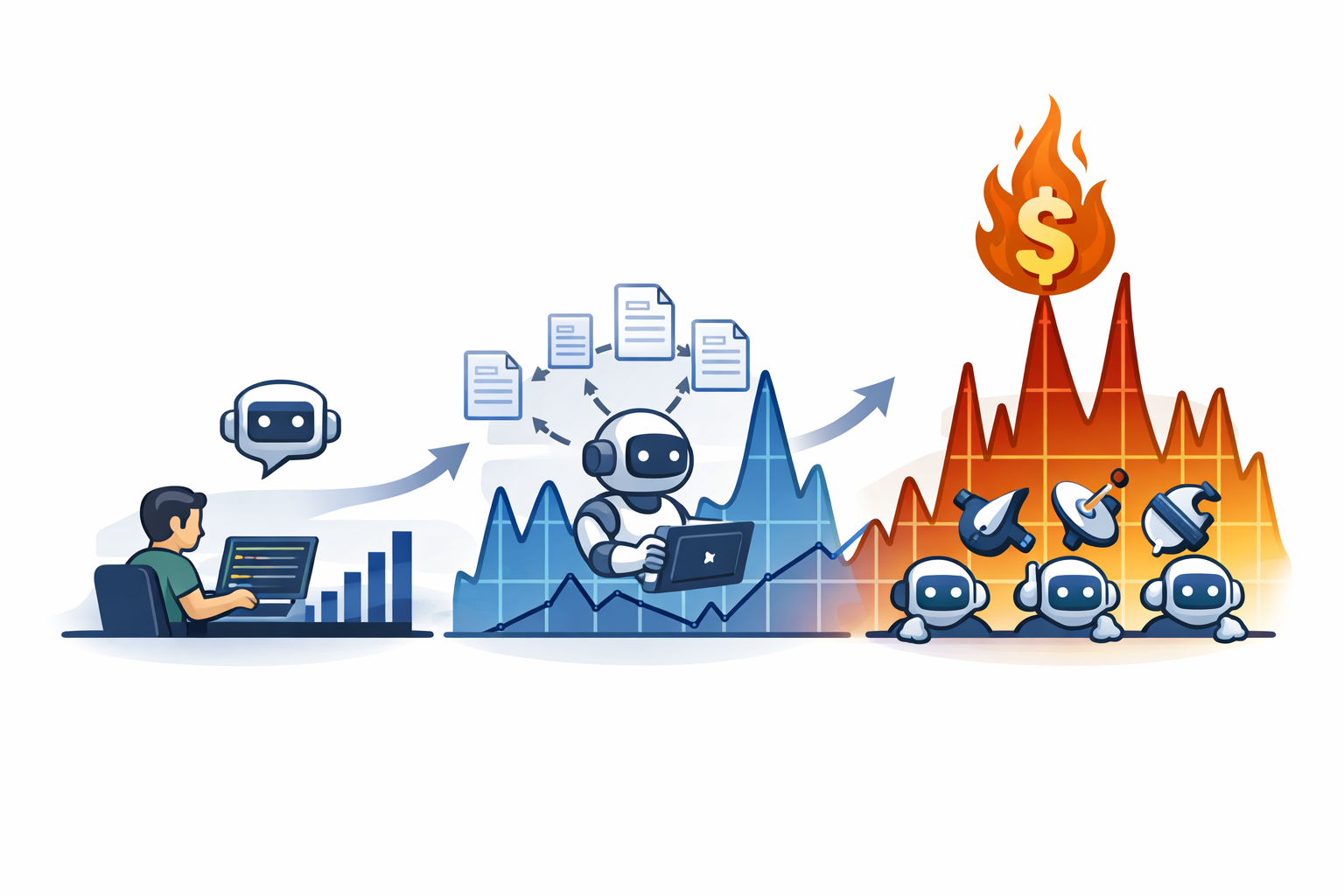
Most enterprise software is sold per seat. You count the licences, multiply by a price, and you have next year’s number. Finance teams have modelled software that way for decades. Agentic AI tools don’t play by those rules. They meter tokens, the small chunks of text a model reads and generates, and consumption swings wildly with how the tool is actually used.
The same engineer, on the same day, with the same tool, can run up completely different bills. An hour of autocomplete costs a fraction of what an hour orchestrating several agents across a large codebase does. A single research request can quietly spin up multiple agents running in parallel, each burning through as many tokens as a full chat session. Even the people using the tools struggle to predict the spend, and administrators often cannot control it across a team. An annual budget built on predictable per-licence costs has no way to absorb that kind of variance.
The Own Goal
Uber didn’t only get caught out by pricing. It actively encouraged the burn. The company ran internal leaderboards ranking engineers by how much AI they used, turning consumption into a competition. The teams driving adoption were not the teams answerable for the bill, and that gap did most of the damage. Cheering people on to maximise token usage, with no line of sight to cost or value, is not an AI strategy. It’s a spending policy with the brakes taken off.
The wider mood has since turned against usage for its own sake, and rightly so. Consumption is not a measure of progress. It never was.
What the Bill Doesn’t Tell You: Value
The sharper question sits underneath the budget. Uber’s president and COO, Andrew Macdonald, said the company cannot yet draw a clear line between rising coding-tool token consumption and the extra useful features it has actually shipped. If you can’t connect the spend to the functionality you are delivering, in his words, “that trade becomes harder to justify.”
That is the real lesson, and it is not an Uber problem. Spending on AI is easy to measure. Value from AI is not, and almost nobody is measuring both in the same place. The co-founder of the expense platform Ramp described it neatly: a new pillar of spend has appeared, running on tokens and intelligence, it isn’t a tidy category, and most finance teams have neither planned for it nor have the tools to manage it. A cost you can see and a value you can’t is the fastest way to lose confidence in a programme that might actually be working.
What Discipline Actually Looks Like
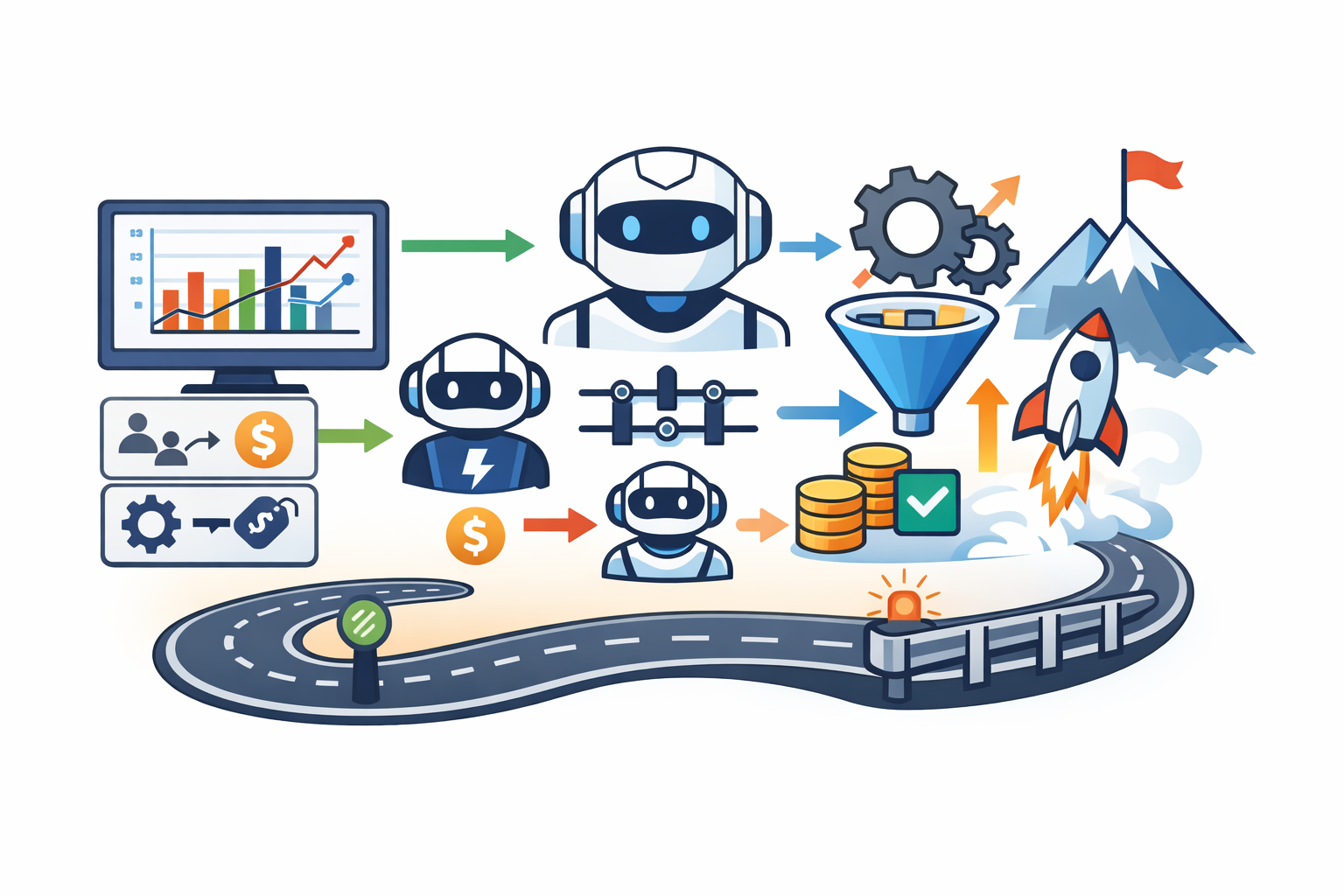
The answer is not a ban. Capping tools and rationing usage is a blunt instrument, and on its own it just swaps runaway cost for throttled productivity. The organisations getting this right treat AI spend as an engineering and governance discipline, the same way mature teams already treat cloud cost. A few things matter more than the rest:
- See the spend where it happens. Per team, per feature, per workflow, and closer to real time than a monthly invoice. You cannot govern what you cannot see.
- Match the task to the cheapest model that clears the bar. Not every job needs the most powerful, most expensive model. Routing routine work to smaller or cheaper models is one of the quickest ways to cut the bill without cutting output.
- Design agents that don’t waste tokens. A large share of spend is avoidable: redundant context, agents left running without limits, the same work repeated because nothing was cached. That is an architecture problem before it is a budget one.
- Tie spend to shipped value. Put cost and outcome in front of the same people. The moment an engineering leader can see cost per feature, the conversation shifts from “use more” to “use well.”
- Set caps as guardrails, not gags. Limits with visibility and an easy path to request more will beat both the free-for-all and the flat no.
The Vendors Noticed Too
This isn’t only a buyer-side scramble. The model providers have started shipping the controls that were missing. The leading AI labs now offer enterprise analytics and spending limits, letting administrators break spend down across the organisation, set caps, and give employees a view of their own budgets. With public listings on the horizon, both have reason to want revenue that looks durable rather than a sugar rush of unmanaged consumption, so the tooling will keep improving. The controls help. They do not remove the need for a spending discipline of your own.
Q&A: Getting a Grip on AI Spend
Is AI just too expensive to run at scale?
No. Uber’s overrun was tiny next to its $3.4 billion research and development budget. The issue was predictability and visibility, not affordability. Token pricing swings with usage in a way per-seat licences never did, and most budgets simply weren’t built for that.
Should we just cap everyone’s usage the way Uber did?
Caps help, but on their own they trade runaway cost for throttled work. Pair them with visibility and an easy exception path, and combine them with model right-sizing so you’re cutting waste rather than output. A cap is a guardrail, not a strategy.
Why is AI spend so hard to forecast?
Because it’s metered by consumption, and consumption depends on how a tool is used. The same engineer can run up very different bills in a single day depending on whether they’re autocompleting or orchestrating parallel agents. One request can spawn several agents, each burning a chat session’s worth of tokens.
How do we know if we’re getting value for the spend?
Most companies don’t, because they measure cost and value in different places, if at all. Put cost per team or per feature next to what actually shipped. If you can’t draw a line from the spend to delivered functionality, that is the first thing to fix, ahead of any cap.
What’s the first practical step?
Get visibility. Before you cap anything, find out where the tokens are going, by team, by tool, by workflow. Most organisations have never seen that breakdown, and are startled by how concentrated, and how avoidable, a good chunk of it turns out to be.
Working Through This With Vertex Agility
Spending heavily on AI with no clear line to the value it returns is the exact problem our AI Consultancy practice was built to solve. Most AI deployments are performance theatre. We integrate AI where it demonstrably pays back, and we will tell you plainly when the spend isn’t earning its place. That means adoption designed around measurable outcomes, with the cost visibility and governance to keep it honest as it scales.
Because Uber’s overrun came through agentic coding tools, our Software Consultancy practice matters here too. Our AI-Augmented Engineering Pipelines put AI to work across code generation, review, and testing inside a governed pipeline, where sensible agent design, routing, caching, and senior oversight quietly remove the waste that runs up the bill in the first place. Treating AI spend like cloud cost – measured, allocated, and controlled – is an architecture decision, and architecture is where we start.
We work across the major model and tool providers rather than for any one of them, so the advice you get is about right-sizing spend to outcome, not defending a licence line. The goal is simple: get the productivity these tools genuinely offer, without handing your finance team a surprise it can’t model.
If you want an honest read on whether your AI investment is delivering a return, and where spend is running ahead of value, our free AI Readiness Mini-Audit covers the use-case value and governance ground this article is about. For a direct conversation about getting a grip on AI cost, get in touch with us below.